Showing posts with label shabbat. Show all posts

Feb 17, 2014

Celebrating Shabbat with Author Tracy Newman

In this week's guest blog post, Tracy Newman, author of Shabbat is Coming! talks about preparing for Shabbat and developing traditions with her family.

Find Shabbat is Coming! on the Kar-Ben website.
 
Shabbat is Coming:
On Fridays, my family knows that something is special is coming.

“Is today Shabbat?” my little one asks, a smile on her face.

“Yes, Shabbat begins tonight,” I answer.

“Yay!” She cheers and does a happy dance.

And so we prepare. We buy flowers for the kitchen table. I cook their favorite dinner (chicken cutlets—just like my grandmother used to make). The kids add candles to the candle sticks, fill the Kiddush cup and lay a fresh, sweet challah on the challah board.

In my home, our celebrations aren’t fancy, and the kids are sometimes restless and tired by sunset, but we do make an effort to mark the start of Shabbat as a special occasion. We honor our heritage and feel proud to continue the traditions of the Jewish people.

As the sky grows dark, we:

Light candles and say blessings.

Drink the fruit of the vine (in our case, lots and lots of grape juice).

Say a blessing for the children and give them an extra kiss on the forehead, and

Break off pieces of sweet and delicious challah for each member of our family to eat.

But we also tailor our celebration to fit our unique family, namely a mother who can’t seem to bake a light and airy challah. My home-baked challah is braided with love and filled with a mother’s goodness, but it is also uncomfortably doorstop-like.

I have taken challah-baking class, twice, to learn the art of making fluffy challah. I have tested the temperature of the water on my wrist to see if it will activate the yeast. I have warmed the dough in an oven to help it rise. I have tried recipes in Jewish cookbooks, off the internet, handed out at my children’s camp.

And, still, no matter what, my challahs remain leaden.

So, to save their mother the disappointment that comes from taking a hockey puck out of the oven, and to save my family the chipped teeth that come from eating their mother’s challah, we have adopted a different tradition.

We enjoy the challah from our local bakery. Sweet, braided, light and fluffy. Like no challah I could ever bake.

For your family, I encourage you to explore your own traditions to create a meaningful Shabbat. It is this sense that I hope to convey in Shabbat Is Coming.

No matter how your family chooses to celebrate this joyous day, I hope that you savor the anticipation of preparing for Shabbat every week. May you and your children have fun reading about and celebrating this day.

Shabbat Shalom!
Learn more about Tracy and her books on her website, tracynewmanbooks.com


Aug 9, 2013

Meet Author Tamar Fox (and get a sneak peek at her new book)!


As the end of summer approaches, it's time to welcome children home from camp and celebrate the last weeks before school together. As Tamar Fox shows us in her new book No Baths at Camp, coming home from summer camp can sometimes get a little tricky!

For a sneak peek at Max's troubles in No Baths at Camp, see the book trailer!


With that in mind, here are five tips for welcoming your child home from summer camp:

1. Remember, hopefully camp was a great and your child will be missing camp activities.

2. Your child will be missing his or her camp friends. If you're able, set up opportunities for them to meet up in person (if they live nearby) or on Skype.

3. Camp often provides lots of opportunities for children to sing together. Encourage your child to teach you one of their camp songs.

4. You child learned some new skills, perhaps a new swim stroke or how to play tennis. Create opportunities to practice these new skills.

5. Remember that Jewish summer camp is about creating Jewish memories - make time during the year to create as many Jewish memories with your family as you can.


A Q&A with author Tamar Fox!

What was your favorite book when you were a child?

The Bungling Ballerinas by Ellen Shire

Who are your top three favorite authors or illustrators?

Marjorie Priceman, MM Kaye, Marc Simont

Why did you want to become an author?

I love to tell stories, and to find out what stories live in other people's brains!

What are you most excited about promoting in your new book?

I'm excited to talk about all the fun things kids can do at camp, and outside with their friends, and all the fun ways that families can celebrate Shabbat together.

How do you hope your book will impact the Jewish life of a child?

I hope families will get excited about the ways that they can celebrate Shabbat, and the kids will get excited about the camping possibilities in their future.

What are you working on now?

Another children's book, this one about Purim. And an adult book about moving.

What are some fun facts about you?

I love polka dots and baking and reading out loud. I can name all 53 countries in Africa and stand on my head.

Find No Baths at Camp on the Kar-Ben website. Audio eBook available for your favorite device wherever eBooks are sold.


Jul 12, 2013

A Simple and Delicious Summery Shabbat Treat!

July means berry season, and what better way to use this tasty summer produce than by making a sweet treat for Shabbat?

No-Bake Berry Cheesecake

1 lb. cream cheese
1/3 cup sugar
2 Tbsp. lemon juice
8 oz. whipped topping
1 graham cracker crust
blueberries, strawberry halves

Beat cream cheese, sugar, and lemon juice until well blended. Stir in two cups of the whipped topping. Refridgerate for several hours. Before serving spread remaining topping over the cake and decorate with fresh berries!


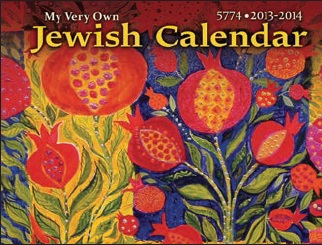
Enjoy this recipe? Kar-Ben's "My Very Own Jewish Calendar" is filled with fun facts, recipes, activities, and more!

Mar 2, 2010

Inside The Shabbat Box

Today's guest post is from Lesley Simpson, author of The Shabbat Box and The Purim Surprise. Her stories have delighted readers in Jewish homes and classrooms. Lesley was kind enough to sit down with us and share how The Shabbat Box came to be such a classic and loveable story. Thanks, Lesley!


Where did you get the idea to write The Shabbat Box?
When my son was in kindergarten, one Friday he brought home a shoebox covered in blue velvet. The box had the word Shabbat in Hebrew letters. Inside the box there was a kiddush cup, some candles, homemade challah rolls from the teacher, and a little book where parents shared their stories about how their kids had used the Shabbat box. I had never seen a Shabbat box before. And I remember being amazed that this box, wrapped in a plastic bag to protect the elegant velvet during the winter snow, was still in one piece, and that the contents were intact. I was amazed because in this particular class there was a rotation system set up, and each kid got a turn to take the box home Friday and return it Monday. I remember lifting the lid. Kiddush cup? Check. Little candlesticks? Check. Shabbat Candles? Check. It seemed like a miracle, especially for five year olds who might be considered particularly skilled when it comes to losing snow pants, mittens and lunchboxes. I think they were, in their own way, each honored to have a turn, and they treated the box with respect. It was seeing this box that inspired me to write the story.

What happened after the book was published?
When you write a book it sometimes takes on a life of its own. You don’t know how people are going to react to the story, what kind of impact it might make, and what kind of independent life it will have without you. With this book, I was tickled when I learned that the book had inspired kids to make their own Shabbat boxes.

Recently, writer Amy Meltzer told a story on her blog (Homeshuling) that was like the story in my book, only it was REAL LIFE. She was concerned her daughter Ella, then five, might not get a turn to take home the Shabbat box from her classroom and that they might need to take matters into their own hands and make one. On the blog you can see a picture of Ella with her gorgeous challah cover. I was not kidding when I said I wanted one!

You will see at the back of the book there are ideas of how to make your own Shabbat box and what you can use to put inside. So you know those shoeboxes you toss into the recycling? Hold onto them. Ribbons from gift-wrap? Buttons that have fallen off coats and dresses? Pop them in the shoebox. Clothing that’s torn, stained, or too small? Save this material—everyone has stuff around their house and you can use anything from old mop strings to a broken hair ribbon or seashells for decoration.

Create a new use for an old thing. (This is something I love to do—finding a new use for an old thing. For example, I am now saving my old sweaty stinky running shoes to plant flowers in them this spring. They will be transformed with flowers spilling out where feet used to be!) It is also something that is a fundamental Jewish value—not to waste.

When I had a book launch for The Shabbat Box we created a series of art stations where kids could paint challah covers, make a spice pouch of besamim, and staple wallpaper samples and fabric to shoeboxes. The range of design was staggering to see, with boxes decorated with everything from sparkly beads, old buttons, ribbons, glitter, fake flowers, stickers, fabric scraps, felt pieces —you name it. You can collect beautiful junk, share your junk with a friend, and make some boxes on a rainy day. Walk around your house and ask people you live with to give you stuff that is broken or torn. Learn to look at it not , for example, as a ripped washcloth, or broken necklace, or uncooked macaroni, but as raw material you can transform.

What do you do when you visit schools or synagogues?
If I am reading The Shabbat Box, I have designed a hands-on art program that will enrich the reading experience. I bring my own box to show the students. I actually have two boxes: one my son made when he was about five, and another one we made during my book launch. The variety shows the kids the possibilities in terms of designing their own creations. I like the idea of making something that is functional, not a cut and paste picture that’s destined for the blue box . You can make something you can use, week after week, whether it’s the challah cover or the candlesticks.

During one of the Jewish Book Fairs in Toronto, the staff created a program where kids could make a placemat and then laminate it. This craft was a great fit because everyone knows someone will manage to spill the grape juice Friday night (or something else) and with lamination, you just wipe clean and bring it out again. In my box, I have some plastic Kiddush cups decorated with beads, a fabric pouch of besamim filled with cloves, cardamom pods and cinnamon (it smells so aromatic it’s addictive), as well as a hand painted challah cover on white canvas. And my confession? Sometimes my box includes candy (as long as I don’t eat it first!)


How can schools get in touch with you?
I am delighted to do readings. Contact me at lesley@lesleysimpson.ca. Label your e-mail "Reading Request for The Shabbat Box."

Check out Jonah's Shabbat box, inspired by the book! (video appears courtesy of Reading Kids are Dreaming Kids)


Oct 1, 2009

Making Jewish Preschoolers Giggle


We asked Jacqueline Jules, author of many Kar-Ben books including the Ziz series, Sydney Taylor Honor Award winner Sarah Laughs, and the preschool favorite Once Upon a Shabbos, to be a guest blogger. Welcome to the Kar-Ben Blog, Jackie!

In 1996, I was “Miss Jackie” to two entirely different groups of preschoolers. During the week, I was a library media specialist who conducted story times for young children who loved nothing more than to be entertained. I read lots of traditional stories with a chorus, because I found my students liked those best. When children happily join along in a repeated song or phrase, story time is an engaging, interactive experience for all.

But “I’ll huff and I’ll puff” is more than an entertaining chant for young learners. It is an opportunity to build language, the foundation for literacy skills.

On Saturdays, I was “Miss Jackie” to a group of preschoolers and their parents who came for Tot Shabbat services. We had a service booklet with a few prayers and just before the end, at the point where a sermon might come in an adult service, I always read or told a story. For my Tot Shabbat kids, I also wanted an engaging, interactive experience. I searched for Jewish children’s books with a traditional chorus, inviting everyone to join in with unabashed glee. There weren’t enough to fill the school year. In fact, many of the Jewish books I found in the public library had a decidedly expository feel to them. They explained Shabbat or Jewish holidays to kids in often lengthy and didactic text. I found this disappointing. Not every Christmas or Easter book explains the religious background of the holiday. Most depicted happy families celebrating within heartwarming or humorous plots. Why were so many Jewish children’s books thinly veiled nonfiction, primarily explaining the reasons behind ritual? And why weren’t there more Jewish books that made preschoolers giggle?

I thought about this one day, as I was reading an Appalachian folktale called Sody Salleratus to my weekday kids. In this traditional story, a grandmother sends out each member of her family to buy sody salleratus or baking soda so she can make biscuits. Each family member leaves the house singing about the item they are to buy and each one encounters a bear, who gobbles them up, much as the wolf in Red Riding Hood. While it may seem at first glance, a gruesome story, it is actually an empowering one because the children roar with the bear just before he swallows each character. And like Red Riding Hood, everyone is extracted from the bear’s stomach for a happy ending. My weekday students adored this story and asked for it again. They loved singing the song. They loved roaring like a bear. And I loved to see them giggle.

“Why isn’t there a Jewish version of Sody Salleratus?” I asked myself. My Tot Shabbat kids would have as much fun with something like this as my weekday kids. So I sat down at my computer to write a Jewish Sody Salleratus. The first thing I did was change the Appalachian setting. It became Brooklyn with a Yiddish speaking Bubbe and Zayde.


Instead of baking soda biscuits, Bubbe was preparing to make her sweet Shabbos kugel for Friday night dinner. Missing a key ingredient from her cabinet, she sends her grandson Jacob to the corner store with a little gelt. Jacob skips out of the apartment, singing “Honey, honey sweet as Shabbos!” Then the bear, who just happens to be lost in Brooklyn, enters. He wants the honey Jacob is taking to Bubbe for her sweet Shabbos kugel.

My Jewish re-telling of Sody Salleratus, went very well up until that point. Then I was stuck! How could the bear swallow Jacob? My Tot Shabbat parents would be horrified! Clearly, my original inspiration could not be followed verbatim. But was there any reason why a nice Jewish family couldn’t make friends with a bear lost in Brooklyn right before Shabbos? Especially a bear who comes from a storybook and loves Shabbos dinner?

With my story finished, I got a bear puppet and performed it for my Tot Shabbat group. It was an immediate hit. The children sang along and roared in all the right places. So did the adults.
Once Upon a Shabbos, my greatly altered Jewish version of Sody Salleratus was published by Kar-Ben Publishers in 1998 with whimsical illustrations by the wonderful Katherine Janus Kahn. Since then, I have received numerous feedback from Jewish teachers and storytellers who tell me they have used Once Upon a Shabbos with great success at their own story times. And when the book went out of print for a couple of years, I heard many pleas for its return. I was absolutely delighted this year when Kar-Ben brought Once Upon a Shabbos back into print by popular demand. For a taste of the book, here's the book trailer:


Gut Shabbos!