Oct 14, 2011

Tzedakah at Sukkot

Tzedakah was an important mitzvah for Jewish farmers, especially at the time of harvest.
The Torah commands farmers to leave a portion of crops unpicked, so the poor might glean (gather) them for food.
Farmers also are required to set aside a tithe (a tenth) of their grain, oil, wine, and livestock. A portion was used to feed the priests at the Holy Temple, and a portion to feed the poor.
Today, some families help glean crops to donate to food banks. Others contribute funds to shelters and soup kitchens that help feed the hungry.
What mitzvot are you doing this Sukkot?
From All About Sukkot by Judyth Groner and Madeline Wikler.

Oct 11, 2011

An Author, An Illustrator, An Editor and ZB the Zebra

Ever wonder how a book goes from idea to printed, bound pages held in your hands?  The Whole Megillah recently interviewed Sadie’s Sukkah Breakfast author Jamie Korngold, illustrator Julie Fortenberry and editor/publisher Joni Sussman to learn more about the creative synergy that produced the book.

The creation of a picture book requires a lot of deliberation and the magic of bringing the best resources together to create the right overall feeling of a book. Perhaps the greatest secret ingredient here were the photos supplied by Jamie to Julie of her children’s stuffed animals (or “stuffies,” as she calls them). Stuffed animals do turn out to be the heroes of the book (you’ll have to read to learn why!), and Jamie’s “kids are thrilled to see them in the book, especially ZB the Zebra.” Clearly, as you can see above, the right forces are at work here!
Read the entire piece at The Whole Megillah blog.

Learn more about Sadie's Sukkah Breakfast and more Sukkot books from Kar-Ben.

Oct 10, 2011

Sadie's Sukkah Breakfast...A Fun New Preschool Tradition?

Sadie's Sukkah Breakfast is the first book in Kar-Ben’s new “Sadie” series (the next one is due out this spring for Shavuot--Sadie and the Big Mountain). Waking up early in the morning on Sukkot, sister and brother Sadie and Ori decide to serve breakfast in the family sukkah. But when the table is set and the food is ready, they remember that a sukkah celebration needs guests. No one is awake, so who can they invite?
Sadie and Ori use their problem solving skills and ingenuity to decide who to invite into their sukkah—their beloved stuffed animals. The book can become the inspiration for a class “teddy bear picnic” in a class or school sukkah, which would also involve the class using their own problem solving skills and ingenuity to design, build and decorate a sukkah worthy of such a meal. Additionally, students can learn basic manners and etiquette and what it means to host others and to share. Eat cereal and challah rolls just like Sadie and Ori!

Learn more about Sadie's Sukkah Breakfast!

Oct 6, 2011

Tolerance, Torah and Tears in Tennessee

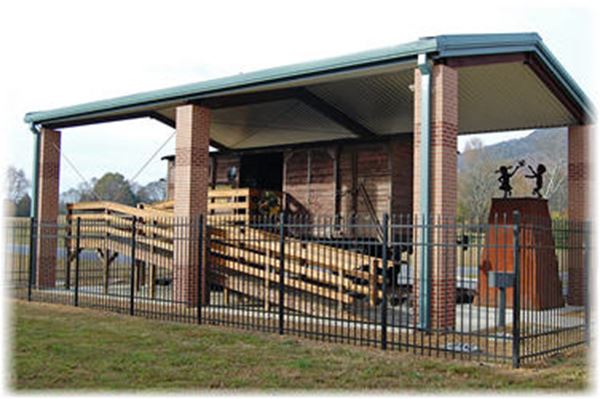
Beth Huppin, a Judaics teacher from Seattle and recent recipient of the National Covenant Award, shares an account of her unusual Rosh Hashanah experience this year. Traveling with her husband, Huppin, who generally attends Shul on the second day of Rosh Hashanah, agreed “with some ambivalence” to visit Whitwell Middle School in rural Tennessee instead. This school, famous for creating a monument to Holocaust victims of Nazi Germany using paper clips as a means for understanding the staggering number of victims, became the subject of the documentary film Paper Clips and the Kar-Ben book Six Million Paper Clips. Huppin’s husband, also an educator, has taught about the Whitwell program in his classes and wanted to visit.

The project, begun about ten years ago, was started by now retired principal Linda Hooper, who remains involved. The school continues to train student docents to give tours to the public, archives letters that continue to arrive “from every corner of the world,” and collects artifacts for the project’s resource room. The day Huppin visited, a class of African-American students from Chattanooga also arrived, learning about the Holocaust from the young white Christian docents -- on Rosh Hashanah.

Two artifacts, in particular, caught Huppin’s attention: a Torah and an Aron Kodesh (a Holy Ark), in a place in America where most people have never met a Jewish person. She writes:

With tears in my eyes I explained to Linda that this was my first Rosh HaShanah not in synagogue. I told her that my friend, Shelly, had reminded me that there is more than one way to worship. Entering this room and seeing the Torah, I was overwhelmed. Being a religious person herself, I could see that Linda understood. God sees and hears prayers in many different forms, she assured me.
Curious students asked to see the Torah, and Huppin and her husband retrieved their tallitot from their car and carefully unrolled the Torah. Huppin chanted from the beginning of Numbers in Hebrew, and the mainly religious (Christian) student body knew there was common ground. After her reading, Huppin relates:

A girl came up to me after the students left, in tears, so moved to have experienced a Torah reading on Rosh Hashanah. It wasn’t the right Torah reading. (I had considered rolling the Torah to the Akedah, but there wasn’t time.) And there wasn’t a minyan. And we hadn’t recited the requiredt prayers. But, as Shelly told me, worship comes in many forms. And we had just experienced it.
I told Linda that this experience would not have been the same if it hadn’t been Rosh Hashanah. “Well then, it must be beshert,” she (a woman who had lived her whole life in rural Tennessee) said with a grin, using the Yiddish word that loosely translated means “fate.”  Of course.
Beshert indeed.

Sep 28, 2011

Be Rude at Rosh Hashanah

In a recent essay in the Albany Times Union, Kar-Ben author Linda Elovitz Marshall writes about the power of words and their ability to create conflict or bring understanding. Marshall’s most recent book Talia and the Rude Vegetables, plays with language as the young protagonist mishears her grandmother ask her to gather root vegetables from the garden for a Rosh Hashanah stew. Marshall writes:

As she digs for the seven vegetables her grandmother requested, Talia ponders what makes a vegetable rude. Does it talk back to its mother and father? Does it push its brothers and sisters around? Talia remembers that she, too, has been rude and that the Jewish holiday of Rosh Hashanah is coming.
Rosh Hashanah is coming, Talia says, I must ask their forgiveness.
As a child, Talia sees clearly what we, adults, often miss. Talia knows she has been wrong and must ask forgiveness. Rosh Hashanah is coming.
As Marshall continues to connect words and deeds in her piece, she emphasizes forgiveness during the Days of Awe, writing: “One might wonder if that is what happened with the children of Abraham. One might wonder if Hagar and Sarah had spoken kindly to each other, cuddled each other's offspring, perhaps there would be more happiness in the world.” Indeed, the connections between thoughts, words and actions is apparent at Rosh Hashanah and Yom Kippur, and Marshall’s assertion that through awareness of rudeness we can arrive at forgiveness is a compelling one.

Read the whole piece.

Sep 21, 2011

Is Blowing the Shofar Dangerous?

Jacqueline Dembar Greene is the award-winning author of more than 30 books for young readers. She loves to write stories about the Sephardic Jews who were her ancestors. Ms. Greene has traveled to Spain, walking in the ancient Jewish quarters in Barcelona, Madrid, Toledo, Seville and Cordoba.  We interviewed Jacqueline about writing The Secret Shofar of Barcelona, a book that depicts a daring Rosh Hashanah celebration in a dark time in Jewish history:
"Musician Don Fernando longs to hear the sounds of the shofar on the High Holidays, but, like the other secret Jews in Inquisition-era Spain, he must hide his religion. When he is asked to perform a symphony celebrating the new world, he and his son Rafael devise a daring plan to usher in the Jewish New Year in plain sight of the Spanish nobility!"  

Where did you get the inspiration for The Secret Shofar of Barcelona?
There was a legend about a composer from Barcelona, who lived during the time of the Inquisition. It was said that he had dared to play the shofar during a concert, risking his life so that the secret Jews could hear it. That sketchy tale inspired me to create new characters, and research the history of music in 1500s Spain. I imagined a new story about young Rafael, who courageously blows the shofar on Rosh Hashanah eve, right under the noses of the dreaded Inquisition.

What is the most interesting thing you learned in the process of writing or illustrating your book?
I was stunned to realize that the secret Jews living in Spain under the rule of the Inquisition had never heard the sound of the shofar. Not hearing that call during the High Holy Days would leave an empty feeling in anyone observing the holidays. I was also surprised to learn that the Spanish conquerors in New Spain (now Mexico) taught the native people to play western instruments, taught them to play church music, and used many native instruments, as well. It was a way to bring non-believers into the church service.

How do you hope your book will impact the Jewish life of a child?
I always write a book to engage a reader or listener to use their imagination as they enter into a different world. The story of Rafael in The Secret Shofar of Barcelona shows how one person, even a child, can make a difference for many. It also demonstrates that standing up for your beliefs sometimes takes real courage.

Anything else you would like to share with readers?
Books open new worlds to you, and every time you curl up with a book in your lap, you have a chance to let your imagination roam and have an armchair adventure. No matter how many electronic games and videos you might choose, a book is always what you make it in your own mind. Always have a book by your side—it doesn’t need a battery! Buy a copy of The Secret Shofar of Barcelona.                                                                                           

Sep 13, 2011

Hanukkah Story Promotes Autism Awareness

Stories can be powerful, accessible ways for children to understand people different than themselves. Stories can also show that people share universal traits in common, like the desire to be happy, healthy and part of a family. Nathan Blows Out the Hanukkah Candles is a book that will connect readers with a young autistic character.
Kar-Ben author Tami Lehman-Wilzig lived for a year in Providence, where she met local PJ Library director, Nicole Katzman. Tami introduced Nicole to her books and Nicole, the mother of four young children (one of whom is autistic) and a fierce campaigner for autistic children's rights, told Tami about her determination to have a book on an autistic child written for the American Jewish community. It didn't take long for the two to pair up and develop Kar-Ben's new book Nathan Blows Out the Hanukkah Candles. Read the authors’ exchange about their story:

Nicole: Accepting the other in our midst is an important Jewish value. As a mother of an autistic child I didn't feel that acceptance. All too often I found the situation to be reverse and at times painful. I knew that in order to help children understand how to accept the other they needed a story to which they could relate.

Tami: I understood Nicole's feeling of urgency. One of my sons has special needs and I remembered how difficult it was for him as a child. In addition, there were autistic twins in our neighborhood while our sons were growing up, so I was already familiar with autistic behavior. For example, they would continually repeat the same question or statement, but we needed more than behavioral differences. We needed a peg around which we could develop a compelling story.

Nicole: At first I tried writing a story, but it didn't work. After reading it, Tami decided that she had to “interview” me. So I told her all about our son Nathan. She kept prodding me with questions. Finally, she said 'give me an example of something Nathan did that got you really upset.'

Tami: The minute Nicole related the incident of Nathan blowing out the Hanukkah candles the previous year, I knew we had the peg. It was perfect. Nathan's action was off the chart and Hanukkah was a wonderful setting. Creating a story around it with the right feel was the challenge. I wanted the story to be true – not too sugary, but not too tough. Finding the right balance was a challenge and it took several drafts, plus the help of “book doctor” Deborah Brodie to put me on the right track. It was Deborah who suggested that I tell the story from a sibling's vantage point.  The minute I did that, everything fell into place. Since I was already familiar with the repetitive nature of autistic children's conversations, I used that particular quirk to jump start the story. I consulted with Nicole throughout the entire writing process to make sure that Nathan's behavior was on track, as well as the reactions of siblings and kids.  

Nicole: It's exciting for me to have a book on an autistic child that is specifically my son. It's more than a dream come true. It's an opportunity to open people's eyes and minds. Too often they are misinformed about autism, insensitive in their comments and judgmental of both the child and his/her caregivers.

Tami: I am so pleased that Nicole inspired me to write this book. Both of us feel that Nathan Blows Out the Hanukkah Candles will make an important contribution to the Jewish community by being read aloud in the classroom or at home, and then used to open a conversation on how to love, respect and understand children who are different.

Nicole: Do you have a child with autism, or a friend or relative? If you have a story of your own please share it with us. Help us break down the barriers.

Please add your voice to Tami and Nicole’s initiative to create more understanding about autism.  Please post your own comments, story or insights about autism below.